
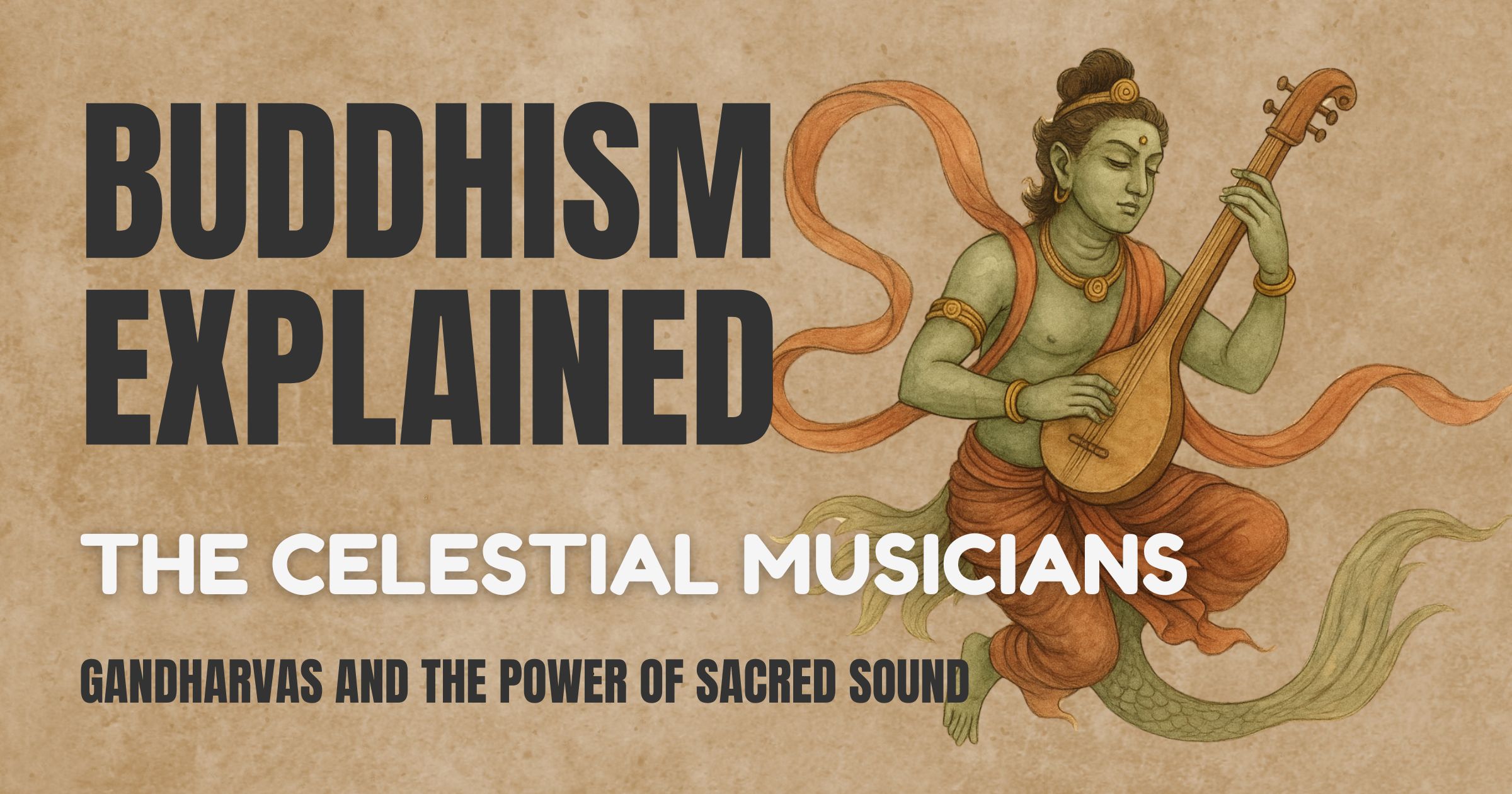
Okay, picture this: you’re walking through a forest, the sun is setting, and suddenly you hear the most hauntingly beautiful music—like a celestial concert coming from somewhere you can’t quite locate. That’s the kind of moment Gandharvas are made for.
In Indian and Buddhist cosmology, Gandharvas are more than just celestial musicians. They’re spiritual beings with deep ties to sound, sensuality, subtle energy, and the in-between spaces of existence. You’ll find them in ancient texts, floating in temple murals, and woven into stories about love, longing, and liberation.
Let’s explore who they are, what they represent, and why they’re still relevant in a world that sometimes feels too loud for subtle harmonies.
Who Are the Gandharvas?
In Hindu mythology, Gandharvas are often described as:
- Celestial beings skilled in music and art
- Servants or attendants of the gods, especially Indra
- Messengers between worlds
- Experts in aromatics, healing, and secret knowledge
They’re associated with beauty, grace, and creativity—but also with desire and temptation. Like many beings in Indian cosmology, they straddle the line between divine and dangerous.
Their counterparts are the Apsaras—celestial dancers and female spirits of beauty and pleasure. Together, they form the cultural dream team of heaven: music and dance.
Gandharvas in Buddhism: From Musicians to Protectors
In Buddhist cosmology, Gandharvas are one of the Eight Legions (Aṣṭasenā)—non-human beings who vowed to protect the Dharma.
Here, they’re not just celestial background singers. They represent a deeper spiritual function: the role of sound and subtle vibration in awakening. Think mantras, chanting, bells, and even silence itself—anything that carries the essence of awareness through the medium of sound.
The name “Gandharva” is also used in early Buddhist texts to describe the intermediate state of consciousness between death and rebirth—a sort of spiritual in-between, which makes sense. After all, music often lives in the space between notes.
The Power of Sound: Why Music Matters in Spirituality
What makes Gandharvas fascinating isn’t just that they play music—it’s that they represent the transformative potential of sound itself.
In both Hindu and Buddhist traditions, sound isn’t just entertainment. It’s energy. It’s vibration. It’s a tool for transcendence.
- Mantras are sacred syllables designed to alter consciousness
- Chanting aligns breath, intention, and focus
- Drumming and bells are used to clear energy and ground the mind
- Silence—the space between sound—is itself sacred
So Gandharvas aren’t just performers. They’re spiritual technicians, using vibration to shift reality.
And in that sense, every time you use sound to center yourself—whether it’s OM, a favorite song, or even a well-timed sigh—you’re tapping into that Gandharva wisdom.
Gandharvas and Desire: Beauty’s Double Edge
There’s a flip side to the Gandharva mythos, though.
Because they’re also associated with beauty, pleasure, and seduction, Gandharvas sometimes represent the dangers of attachment. Their music can be uplifting—or distracting. Their beauty can inspire—or entangle.
In some stories, Gandharvas are sent to tempt ascetics off their path, reminding us that even beauty can become a trap if we’re not mindful.
But that doesn’t make them “bad.” It makes them honest. They show us that the same force that can awaken us can also derail us, depending on how we relate to it.
Gandharvas Today: Why They Still Matter
In a world that’s overflowing with noise—notifications, podcasts, TikToks—it’s easy to forget the spiritual power of sound.
But the Gandharva archetype invites us to listen differently. To notice how music changes our mood. To use sound to focus rather than distract. To find moments of presence in melody, rhythm, and even silence.
You don’t need to play a sitar or sing mantras to connect with this. Just ask:
- What sounds nourish my spirit?
- What do I really hear when I stop and listen?
- How can I use sound to return to awareness instead of escape from it?
When you engage with those questions, you’re already walking the Gandharva path.
Final Thoughts: Between Worlds, Between Notes
Gandharvas live in the margins—in the space between earth and heaven, sound and silence, form and feeling.
They remind us that beauty can be a bridge or a barrier. That music can soothe or stir. And that awakening doesn’t always come through silence—it can also arrive wrapped in melody, echo, and song.
So next time you hear a sound that moves you—really moves you—don’t just enjoy it.
Pause. Breathe. Listen deeply.
That might just be the Gandharvas, tuning your soul.





 English
  简体中文
简体中文